 grozdan44
Best Time to Visit Armenia — Month by Month Guide 2026
Spring and autumn are best. Here’s exactly what each month looks like and who should go when.
The short answer is May–June or September–October. But the longer answer is more interesting: Armenia has genuinely distinct seasons that suit different kinds of travel, different destinations and different budgets. The country in April — green hillsides, empty monasteries, cool air and wildflowers — is a completely different experience from the same country in August, when Yerevan is at 36°C and Lake Sevan is packed with day-trippers. This guide tells you what to actually expect, month by month.
✓ Best
May · June · September · OctoberPerfect weather, wildflowers or autumn colour, moderate crowds, all sites open.
Good
April · NovemberCool, quieter, some unpredictable weather. Good value and uncrowded.
Avoid if possible
July · AugustVery hot in Yerevan, crowded at Sevan, peak prices. Go early morning or head to mountains.
Special interest
December · January · FebruarySnow, Christmas atmosphere in Yerevan, Khor Virap with Ararat in winter light. Very few tourists.
Quick Answer — When Is the Best Time to Visit Armenia?
May–June and September–October are the best months for most visitors. In spring, the hills above Yerevan are green, the wildflowers are out on the hillsides around Khor Virap and Noravank, temperatures are comfortable (18–26°C), and the crowds have not yet arrived. In autumn, the Debed Canyon and Tatev gorge turn gold and amber, the summer heat has broken, and Yerevan’s restaurants and bars fill with a more relaxed crowd. Both windows have all sites open and accessible.
July–August works for Lake Sevan swimming and mountain hiking in Syunik, but Yerevan is very hot and accommodation prices peak. Winter (December–March) is best for photographers wanting Khor Virap with snow and Ararat — and for travellers who simply prefer empty monasteries.
Featured Answer — Best time to visit Armenia
The best time to visit Armenia is May–June or September–October. Spring (May–June) brings green hillsides, wildflowers, comfortable temperatures of 18–26°C and relatively few tourists. Autumn (September–October) offers golden light in the Debed Canyon and Tatev gorge, warm but not hot weather, and the end of the summer peak. Both seasons have all sites fully accessible. July–August are the hottest and most crowded months; winter (December–February) suits travellers who want solitude and the iconic view of Khor Virap with snow-covered Mount Ararat.
What’s in this guide
Spring in Armenia — March to May
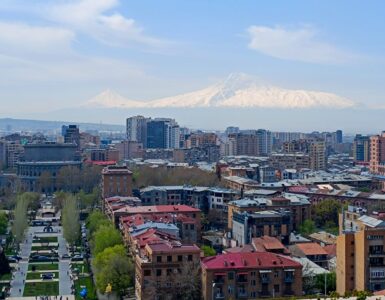
Spring is the season that surprises people most. March is transitional — cold nights, unpredictable weather, but the first green appearing on the hillsides around Yerevan. April is when Armenia begins to look extraordinary: the hills above Khor Virap turn bright green against the snow-capped cone of Ararat, the apricot trees (Armenia’s national tree) blossom in pink and white across the Ararat plain, and the roads to all the main sites are open and accessible.
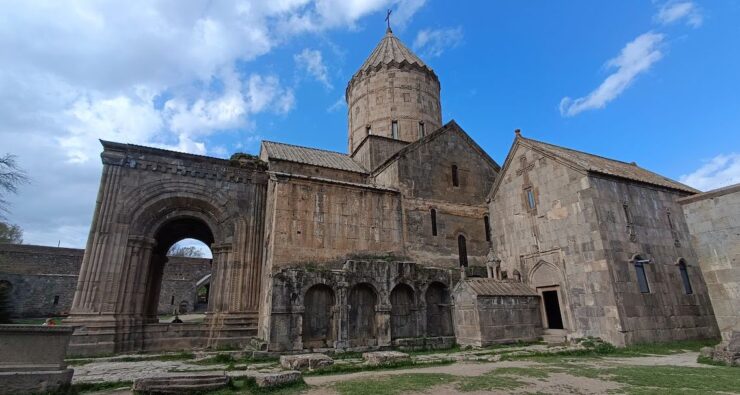
May is the best single month in the country. Temperatures in Yerevan reach 22–26°C, the wildflowers on the hillsides above Noravank and in the Debed Canyon are in full bloom, and the tourist crowds have not yet arrived. The monasteries — Geghard, Haghpat, Tatev — can often be visited with almost no other visitors on a Tuesday or Wednesday morning.
March
Cold to mild (4–14°C). Some rain and occasional late snow. The mountain roads to Tatev and northern Armenia can still be icy in early March. Crowds: very low. Prices: low season. Good for Yerevan city exploration but not ideal for mountain or rural sites.
April
Warming up (10–20°C). Apricot blossom across the Ararat plain in mid-April is genuinely worth planning around — it lasts about two weeks and produces one of the most beautiful landscapes in the Caucasus. Some rain. All main roads open. Crowds: low-moderate. Prices: shoulder season.
May
The best month (18–26°C). All sites accessible, wildflowers in full bloom, comfortable temperatures throughout the country. Armenian food festival season begins. Crowds building towards the end of the month but still manageable. Prices: rising towards peak but not there yet. Top recommendation for most visitors.
Spring booking tip
May dates — particularly the first two weeks — sell out faster than any other period. Book accommodation 6–8 weeks ahead for Goris (Tatev region) and Alaverdi (Debed Canyon). Yerevan has more flexibility but the better-value guesthouses go early.
Summer in Armenia — June to August
June is still excellent — temperatures are comfortable in the first half (24–28°C), the countryside is still green, and the shoulder-season prices of late spring have not fully shifted to peak. The second half of June gets hot in Yerevan and the hills begin to dry and brown.
July and August are the hottest months — Yerevan regularly hits 35–38°C and the Ararat plain can reach 40°C. This is when Armenian families head to Lake Sevan, Dilijan or the mountains, and tourist accommodation at Sevan fills to capacity. It is not a reason to avoid Armenia entirely, but it changes the character of the visit significantly.
June
First half: excellent (24–28°C). Second half: hot (28–34°C). All sites open. Lake Sevan water warming towards swimming temperature. Crowds: moderate-high. Prices: peak season begins. Yerevan Wine Days festival typically in late May / early June — worth timing around.
July
Very hot in Yerevan and lowlands (32–38°C). Mountain areas (Tatev, Dilijan, Syunik highlands) are cooler and very pleasant. Lake Sevan at peak temperature (~20°C) and peak crowds. Vardavar water festival in late July — a chaotic, joyful city-wide water fight across Yerevan. Crowds: peak. Prices: peak.
August
Similar to July. Yerevan heat peaks. Best strategy: use Yerevan as an evening base and spend days at higher altitude. The Debed Canyon and Tatev gorge are cooler than the lowlands. Crowds: peak. Prices: peak. Book everything well in advance.
July–August in Yerevan
If you must travel in July or August, prioritise early morning monastery visits (before 9am, before tour buses), afternoon rest during peak heat, and evening exploration. Book accommodation with air conditioning — it is not a luxury in August, it is a necessity.
Autumn in Armenia — September to November
September is the second-best month in Armenia, and many experienced travellers prefer it to May. The summer heat breaks in early September, the countryside around the Debed Canyon and Tatev gorge begins to change colour, and the crowds of August thin quickly after the first week. Yerevan’s restaurant scene enters its best season — the summer terrace culture continues but with cooler evenings and a more local crowd.
October is when the Lori and Syunik regions — the Debed Canyon, the forests around Dilijan, the Tatev gorge — reach their most beautiful. The chestnut and oak trees above Haghpat and Sanahin monasteries turn gold and copper. The gorge at Noravank — always dramatic — becomes extraordinary with autumn light on the red rock. This is the best month for photography in Armenia.
September
Warm and golden (22–30°C in early September, cooling to 16–22°C by end of month). Summer crowds thin after the first week. All sites open. Lake Sevan still warm enough for swimming in the first half. Prices: dropping from peak. Top recommendation, especially for the Tatev and Debed Canyon region.
October
Ideal temperatures (12–20°C). Autumn colour peaks mid-to-late October. Debed Canyon, Dilijan and Tatev gorge are at their most beautiful. Some rain, particularly in the north. All main roads still open. Crowds: low-moderate. Prices: shoulder season. Best month for Haghpat, Sanahin and Tatev.
November
Cooling rapidly (6–14°C). Autumn colour fading by mid-November. Some rain and the first snow on high mountain roads. Mountain passes (roads to remote areas) may become difficult in late November. Crowds: low. Prices: low season. Good for budget travel with flexible itinerary.
Winter in Armenia — December to February
Winter in Armenia is underrated as a travel season for a specific type of visitor. Yerevan in December has a genuine Christmas atmosphere — the Northern Avenue and Republic Square are illuminated, the outdoor ice rink opens, and the restaurants and wine bars are busy with locals in a way that is quite different from the tourist-heavy summer.
The iconic winter view is Khor Virap monastery with snow on the Ararat plain and the summit of Mount Ararat gleaming white behind it. On a clear winter morning, this is one of the most beautiful photographs in the Caucasus — and the road to Khor Virap is accessible year-round. Geghard and Sevanavank are also accessible and completely empty.
The mountain roads to Tatev and the Debed Canyon can be difficult or impassable after heavy snow — check conditions before attempting them in January or February. A 4WD is strongly recommended for winter travel outside the main roads.
December
Cold (0–8°C in Yerevan, colder at altitude). Christmas and New Year atmosphere in the city. Khor Virap with snow is at its best. Crowds: very low except around New Year. Prices: low season except 25–31 December. All Yerevan attractions open.
January
Coldest month (-2–5°C). Armenian Christmas falls on January 6th — a major holiday with church services, family gatherings and a different atmosphere from Western Christmas. Mountain roads may be closed. Crowds: minimal. Prices: lowest of the year.
February
Still cold but days begin to lengthen. Late February can have bright clear days with snow still on the mountains. Trndez festival (pagan-Christian fire festival, late January/early February) is worth timing around in Yerevan. Crowds: very low. Prices: low.
Winter advantage
Winter is the only time of year when you can have major sites like Geghard or Sevanavank entirely to yourself. The experience of Geghard’s cave churches in silence, with no tour groups, is qualitatively different. If you can handle cold temperatures and carry good layers, early January is a remarkable time to visit.
Month by Month — Quick Reference
Armenian Christmas (Jan 6). Very quiet, lowest prices. Some mountain roads closed. Khor Virap stunning in snow.
Quiet seasonTrndez fire festival (late Jan/early Feb). Still cold but days lengthening. Very few tourists. Good budget travel.
Quiet seasonTransitional. Some rain. Mountain roads reopening. Good for Yerevan; wait for April for rural sites.
ShoulderApricot blossom mid-April — unmissable. Some rain. Green hillsides. All roads open. Low-moderate crowds.
Very goodBest month overall. Wildflowers, clear skies, comfortable everywhere. Wine Days festival late May/early June.
★ Best monthFirst half: excellent. Second half: hot and busy. Mountains still cool and beautiful. Sevan warming up.
★ First half bestVery hot lowlands. Sevan packed. Vardavar festival. Mountains are best bet. Peak prices and crowds.
Avoid lowlandsHottest month. Sevan swimming peak. Yerevan is best in evenings. Mountain regions pleasant. Peak everything.
Avoid middaySummer crowds gone. Warm days, cool evenings. Sevan still swimable early Sept. Colours starting in north.
★ Best monthAutumn colour peaks. Haghpat, Sanahin, Tatev gorge at their most beautiful. Light rain. Best photography month.
★ Best for north & southAutumn fading. First snow on high peaks. Some mountain roads closing. Good budget travel with flexible plans.
ShoulderChristmas atmosphere in Yerevan. Khor Virap with snow is exceptional. Very few tourists outside New Year.
Special interestBest Time by Destination
| Destination | Spring (Apr–May) | Summer (Jun–Aug) | Autumn (Sep–Oct) | Winter (Dec–Feb) |
|---|---|---|---|---|
| Yerevan | ★ Excellent | Hot; evenings good | ★ Excellent | Good (festive Dec) |
| Khor Virap / Ararat | ★ Apricot blossom | Good, hazy | ★ Clear skies | ★ Snow + Ararat |
| Garni & Geghard | ★ Wildflowers | Hot but fine | ★ Good light | Empty, cold |
| Lake Sevan | Green, cold water | ★ Swimming | Quieter, warm water | Atmospheric, cold |
| Tatev Monastery | ★ Flowers, clear | Fine, some haze | ★ Autumn gorge | Cable car may close |
| Debed Canyon (Haghpat/Sanahin) | ★ Green forest | Good, cooler than south | ★ Autumn colour | Some roads tricky |
| Noravank Canyon | ★ Green backdrop | Red rock in summer | ★ Golden light | Snow on red rock |
| Dilijan / North Armenia | ★ Spring forest | ★ Cool refuge from heat | ★ Autumn colour | Cold, some closures |
Festivals & Events Worth Planning Around
| Event | When | Where | What it is |
|---|---|---|---|
| Armenian Christmas | January 6 | Nationwide | Church services, family feasts, quieter than Western Christmas but atmospheric in Yerevan |
| Trndez | Late Jan / early Feb | Yerevan + villages | Pagan-Christian fire festival — couples jump over bonfires for good luck. Unusual and worth seeing |
| Apricot blossom | Mid-April | Ararat plain | Not a festival but a natural event — the Ararat plain turns pink-white for about 2 weeks |
| Yerevan Wine Days | Late May / early June | Yerevan city centre | Armenian and regional wine festival — producers from across the country, outdoor tastings |
| Erebuni Yerevan Festival | October | Yerevan | City founding anniversary — cultural events, concerts, street performances |
| Vardavar | Late July (98 days after Easter) | Nationwide, especially Yerevan | Ancient water festival — everyone drenches everyone else. Chaotic and joyful |
| Areni Wine Festival | First Saturday of October | Areni village, Vayots Dzor | Wine harvest festival in the country’s main wine village — tastings, food, folk music |
| Golden Apricot Film Festival | July | Yerevan | International film festival with regional focus — screenings, events throughout the city |
Plan & Book Your Armenia Trip
Once you have settled on your travel window, the practical next steps are flights, accommodation and tours — in roughly that order, since flights constrain dates and accommodation in peak season (May, September–October) sells out faster than most visitors expect.
For the Tatev and Debed Canyon region, book guesthouses in Goris and Alaverdi as soon as dates are confirmed — they are small operations and fill weeks ahead in October:
Tours from Yerevan to the main sites run year-round but operate most frequently in spring and autumn — book ahead for private tours:
More Armenia Planning Guides
- Armenia Travel Guide 2026 — complete country overview
- Yerevan Travel Guide 2026 — the capital
- Armenia Travel Costs 2026 — real budget breakdown
- Is Armenia Safe? 2026 — safety guide
- Garni Temple & Geghard from Yerevan — best in May
- Lake Sevan Guide 2026 — best in June or September
- Tatev Monastery Guide — best in May or October
- Debed Canyon — Haghpat & Sanahin — best in October
- Best Time to Visit Georgia 2026 — for the neighbouring country
- 2-Week Georgia & Armenia Itinerary
Frequently Asked Questions
What is the best time to visit Armenia?
May–June and September–October. May brings wildflowers, green hillsides and comfortable temperatures of 18–26°C with few crowds. September–October brings golden autumn colour, especially in the Debed Canyon and Tatev gorge, with cooler temperatures and the end of summer prices. Both windows have all sites fully accessible.
What is Armenia like in summer?
Hot in the lowlands — Yerevan regularly reaches 35–38°C in July and August. Lake Sevan is at its best for swimming (water temperature 18–22°C) but very crowded. The mountain regions (Dilijan, Tatev, northern Armenia) are cooler and pleasant. Summer is peak season with peak prices and crowds; visit early morning to avoid both heat and tour groups at the main sites.
Is Armenia worth visiting in winter?
Yes, for a specific type of traveller. Yerevan has a genuine Christmas atmosphere in December. Khor Virap monastery with snow and Mount Ararat behind it is one of the most beautiful views in the Caucasus. Monasteries like Geghard and Sevanavank are completely empty. The risks: some mountain roads close, the Wings of Tatev cable car may suspend in bad weather, and temperatures are cold (0 to -5°C in Yerevan, colder at altitude). Bring proper winter clothing.
When are crowds worst in Armenia?
July–August at Lake Sevan and in Yerevan. The main monasteries (Geghard, Sevanavank, Tatev) also see peak visitor numbers in summer, with tour buses arriving from 10am. To avoid crowds at any time of year, arrive at sites before 9:30am or visit on a Tuesday or Wednesday rather than a weekend.
What is the best month to visit Armenia for the first time?
May is the best single month for a first visit — comfortable temperatures throughout the country, wildflowers on the hillsides, all sites accessible, and moderate rather than peak crowds. September is an excellent alternative if May flights are expensive or unavailable.
When is the apricot blossom in Armenia?
Mid-April, typically the second and third weeks of the month. The apricot trees on the Ararat plain and in the Ararat valley blossom in pink and white — it lasts approximately two weeks and is one of the most beautiful natural events in the Caucasus. The exact timing varies by 1–2 weeks depending on the year; local guesthouses can give you current conditions.
When should I visit the Debed Canyon (Haghpat & Sanahin)?
October is the best month for the Debed Canyon. The chestnut and oak forests above Haghpat and Sanahin monasteries turn gold and copper, the light at lower angles makes the dark stone churches more dramatic, and there are very few visitors. Spring (May) is the second-best option when the forest is fresh green. Avoid July–August when the canyon is warm but not at its most photogenic.
Ready to Book Your Armenia Trip?
Spring and autumn dates sell out fast. Lock in accommodation as soon as your flights are confirmed.
This article contains affiliate links. If you book through them, CaucasusExpert.com earns a small commission at no extra cost to you. All recommendations are based on personal experience and honest assessment. Full disclosure policy.