 grozdan44
15 Best Places to Visit in Armenia 2026
From Yerevan to Tatev to the Debed Canyon — ranked by a local, not an algorithm.
Armenia is a small country — you can drive across it in four hours — but the density of remarkable places within that space is exceptional. Ancient cave monasteries, a lake at 1,900 metres, one of the world’s great cable car rides, a forest city that functions as the country’s escape valve from summer heat, and a second city that most international tourists never visit. This list covers the 15 best places in Armenia, ranked honestly by someone who lives here.
Quick answer — best places in Armenia
The five unmissable places in Armenia are: Yerevan (base and gateway), Khor Virap (best view in the country — Ararat at dawn), Garni and Geghard (Hellenistic temple plus UNESCO cave monastery, 40 km from Yerevan), Tatev (cable car over the Vorotan gorge), and Noravank (red limestone canyon). Those five cover the essential Armenia. Everything else on this list adds depth.
Quick Answer — What are the best places to visit in Armenia?
The top 5 best places in Armenia: (1) Yerevan — the capital, your base, worth 2–3 days. (2) Khor Virap — best Ararat view in the country, 30 km south of Yerevan. (3) Tatev Monastery — cable car over a 320-metre gorge, most dramatic site in the south. (4) Noravank Canyon — red limestone walls, 13th-century monastery. (5) Garni and Geghard — Hellenistic temple plus UNESCO cave monastery in the Azat gorge. Add Lake Sevan, Dilijan and the Debed Canyon for a complete Armenia experience.
All 15 Best Places — At a Glance
| # | Place | Distance from Yerevan | Best for | Time needed |
|---|---|---|---|---|
| 1 | Yerevan | — | Base, food, culture | 2–3 days |
| 2 | Khor Virap | 30 km south | Ararat views | 1–2 hrs |
| 3 | Tatev Monastery | 260 km south | Cable car, gorge | Full day |
| 4 | Noravank Canyon | 120 km south | Red rock scenery | 1–2 hrs |
| 5 | Garni & Geghard | 28–40 km east | First-time visitors | Half day |
| 6 | Lake Sevan | 65 km north | Swimming, trout, views | Full day |
| 7 | Dilijan | 100 km north | Forest, monasteries | Full day/overnight |
| 8 | Debed Canyon (Haghpat + Sanahin) | 160 km north | UNESCO, autumn colour | Full day |
| 9 | Areni Wine Region | 120 km south | Wine, oldest winery | Half–full day |
| 10 | Gyumri | 128 km northwest | Architecture, culture | Full day/overnight |
| 11 | Geghard Monastery | 40 km east | Cave monastery | 1.5 hrs |
| 12 | Tsitsernakaberd | Yerevan | Armenian Genocide Memorial | 2–3 hrs |
| 13 | Khndzoresk | 270 km south | Cave village, gorge | 1.5–2 hrs |
| 14 | Harichavank | 148 km northwest | Monastery + Aragats view | 1 hr |
| 15 | Garni Gorge (Symphony of Stones) | 32 km east | Basalt columns, nature | 45 min |
Jump to place
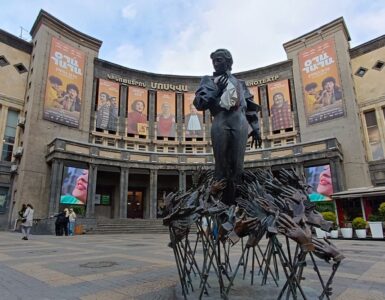
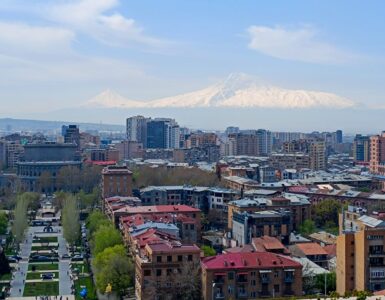
Yerevan is Armenia’s capital and your base for the entire country. Built largely in pink and grey tuff volcanic stone, it sits at 900 metres with Mount Ararat visible on clear days from the higher streets. Republic Square, the Cascade, the Genocide Memorial, the Kond old quarter, Saryan Street wine bars and GUM market together make up a city worth 2–3 days of genuine attention — not just a transit point to the monasteries.
The food scene is exceptional for a city this size: natural wine bars, excellent Armenian cuisine from every region, craft coffee and a nightlife that continues well past midnight in July. Yerevan is also significantly cheaper than Istanbul or Tbilisi at comparable quality levels.
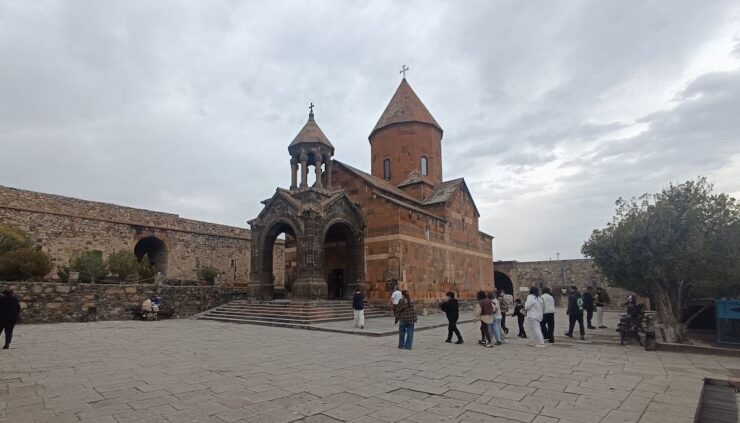
Khor Virap monastery sits on a low hill 30 km south of Yerevan on the Ararat plain. Behind it, 32 km away and appearing impossibly close, is Mount Ararat — 5,137 metres, snow-capped year-round, technically in Turkey but inseparably Armenian in identity. The combination of the 17th-century monastery and the mountain is the defining image of Armenia.
The historical significance is real: this is where Gregory the Illuminator was imprisoned for 13 years before converting King Tiridates III and making Armenia the world’s first Christian nation in 301 AD. The underground pit is still accessible to visitors. Go at dawn in summer — Ararat is clearest before 10am.
Tatev is the furthest major destination from Yerevan — 260 km, 3.5 hours — and the one most visitors say they remember longest. The Wings of Tatev cable car descends 320 metres into the Vorotan gorge over 5.7 km, passing over cliff faces and forest that has no road access. The 9th-century monastery at the far end is exceptional by itself. Together they constitute the most dramatic single experience in Armenia.
Noravank is a 13th–14th century Armenian monastery built into a red limestone canyon — the approach road, which cuts between vertical canyon walls before the monastery appears at the end, is itself the arrival experience. The Surb Astvatsatsin church has an external staircase so narrow you descend it backwards. In afternoon light the red walls and monastery stone form one of the most visually intense combinations in Armenia.
Always combined with Khor Virap and Areni for the classic southern Armenia day trip — the three sites together cover 140 km of the most varied landscape in the country.
Garni is a 1st-century Hellenistic temple — the only surviving one in the former Soviet Union — on a cliff above the Azat gorge. Geghard is a UNESCO World Heritage cave monastery 8 km further along the same gorge, with two of its main churches carved directly into the cliff. The Symphony of Stones basalt column wall between the two is worth 20 minutes of anyone’s time. Together they are the best half-day trip from Yerevan.
Planning to visit these places?
Base yourself in Yerevan. Book hotels, compare tours and sort car rental before you arrive — peak season (July, October) fills fast.
Lake Sevan sits at 1,900 metres above sea level — the largest high-altitude lake in the world by some measures — and is a vivid blue that photographs do not quite capture. Sevanavank monastery on the peninsula (9th century, 200 steps, free) gives the best view over the water. The ishkhan trout endemic to the lake, grilled whole over charcoal at a lakeside restaurant, is one of the defining meals of Armenia. Almost always combined with Dilijan.
Dilijan earns its nickname — the density of ancient beech and oak forest in the national park is unusual in a country where most of the landscape is drier. Haghartsin monastery (10th–13th century, 9 km into the forest) is one of the most atmospheric medieval sites in Armenia. In October the forest turns gold and copper; the monastery in autumn colour is one of the finest visual combinations in the country.
The Debed Canyon in northern Armenia contains two UNESCO World Heritage monasteries within 7 km of each other — Haghpat (976 AD) and Sanahin (10th century) — surrounded by chestnut and oak forest that turns gold in October. The canyon itself, approached by road from Alaverdi, is one of the most dramatic drives in Armenia. The area is also on the main overland route between Yerevan and Tbilisi.
The Areni village area in Vayots Dzor region is Armenia’s most important wine region — home of the indigenous Areni Noir grape and the site of the world’s oldest known winery (4,100 BC, discovered in the Bird’s Cave in 2007). Family wineries offer cellar tastings. The cave itself (Hnaberd) is accessible by guided tour. Always combined with Noravank and Khor Virap for the full south day.
Gyumri is Armenia’s second city and its most undervisited by international tourists. The Kumayri historic quarter of 19th-century black tuff stone houses is unique in Armenia; the city has a genuine craft tradition (carpet weaving, ceramics) and a different, rougher character than Yerevan. The 1988 earthquake killed 25,000 people in the region and the rebuilding was never complete — Gyumri carries that history visibly, which makes it more real than more polished destinations.