 grozdan44
20 Best Things To Do in Armenia in 2026
A local’s honest list — not the tourist brochure version.
Armenia packs an extraordinary range of experiences into a country the size of Belgium. Medieval monasteries carved into gorge walls, a 9th-century cable car ride over a 320-metre canyon, freshwater trout from a lake at 1,900 metres, the closest accessible view of a 5,137-metre snow-capped volcano that officially belongs to a neighbouring country, and a wine culture 6,000 years old. This list covers the twenty things most worth your time — ranked honestly, not alphabetically.
Quick Answer — Best things to do in Armenia
The top five experiences in Armenia: standing at Khor Virap with Mount Ararat behind you; taking the Wings of Tatev cable car into the Vorotan gorge; swimming in Lake Sevan in summer; walking through Geghard Monastery’s cave churches; and spending an evening on Saryan Street in Yerevan with a glass of Areni wine. Between these five experiences you have covered the landscape, the history, the natural wonder and the food and wine culture that make Armenia worth the journey.
Planning your Armenia trip?
Most of these experiences require a base in Yerevan. Book your hotel first — July is peak season and the better options fill well ahead. For day trips to Tatev, Sevan and Garni/Geghard, organised tours or private transfers are the most practical options.
Map — Best Places to Visit in Armenia
Jump to section
🏛 Monasteries & History
Stand at Khor Virap with Mount Ararat Behind You
Khor Virap monastery sits on a hill 30 km south of Yerevan — a 17th-century Armenian Apostolic church on the site where Gregory the Illuminator was imprisoned for 13 years before converting King Tiridates III to Christianity in 301 AD. What makes it extraordinary is what sits behind it: Mount Ararat, 5,137 metres, snow-capped year-round, technically in Turkey but so close and so dominant that it feels like Armenia’s mountain. The view from Khor Virap is one of the most photographed in the Caucasus — and unlike most famous views, it is better in person.
Best time: early morning before haze builds (Ararat is clearest before 10am). July mornings are particularly clear after overnight cooling.
Walk Through Geghard Monastery’s Cave Churches
Geghard is 40 km east of Yerevan in the Azat river gorge — a medieval monastery complex that begins as a conventional Armenian stone church and then continues underground, carved directly into the cliff face. Two of the main churches are entirely hewn from rock. Stalactites hang from the ceilings. Spring water seeps through the walls. The acoustics do something extraordinary to sound — if there is a choir rehearsing when you visit, stay for it. UNESCO-listed since 2000. Free entry.
Visit Haghpat & Sanahin in the Debed Canyon
Two UNESCO World Heritage monasteries in the forested Debed Canyon of northern Armenia — 160 km from Yerevan, directly on the road from Tbilisi. Haghpat (founded 976 AD) and Sanahin (10th century) are the finest examples of medieval Armenian architecture in the country. The Debed Canyon in October — when the chestnut forests turn gold — is one of the most beautiful landscapes in the Caucasus. Both are free to enter.
Spend 2–3 Hours at Tsitsernakaberd
The Armenian Genocide Memorial and Museum in Yerevan is not optional for anyone who wants to understand Armenia and Armenians. The 1915 genocide of approximately 1.5 million Armenians by the Ottoman government is the event that defines modern Armenian identity — the diaspora, the relationship with Turkey, the political sensitivity around Ararat and eastern Anatolia all trace back to it. The memorial complex is one of the best-designed of its kind in the world. Museum entry AMD 1,000 ($2.56). Allow 2–3 hours.
See Noravank in Its Red Rock Canyon
Noravank monastery (13th–14th century) sits at the end of a narrow canyon of red-orange limestone 122 km south of Yerevan. The canyon walls close in on both sides, the monastery is built into the cliff, and the external staircase of the Church of Surb Astvatsatsin is so narrow you have to descend backwards. The combination of the canyon scenery and the architectural quality is unlike anything else in Armenia. Free entry; allow 45–60 minutes. Usually combined with Khor Virap on a day trip.
🏔 Nature & Landscapes
Take the Wings of Tatev Cable Car
The Wings of Tatev is a 5.7 km reversible aerial tramway — one of the longest in the world — that descends 320 metres into the Vorotan gorge to Tatev Monastery. The 12-minute ride across the gorge, with the monastery growing ahead and the river far below, is one of the more remarkable transport experiences in the Caucasus. The monastery itself (9th century, free entry) is on a basalt plateau with views of the gorge on three sides. 260 km from Yerevan — worth an overnight in Goris.
Spend a Day at Lake Sevan
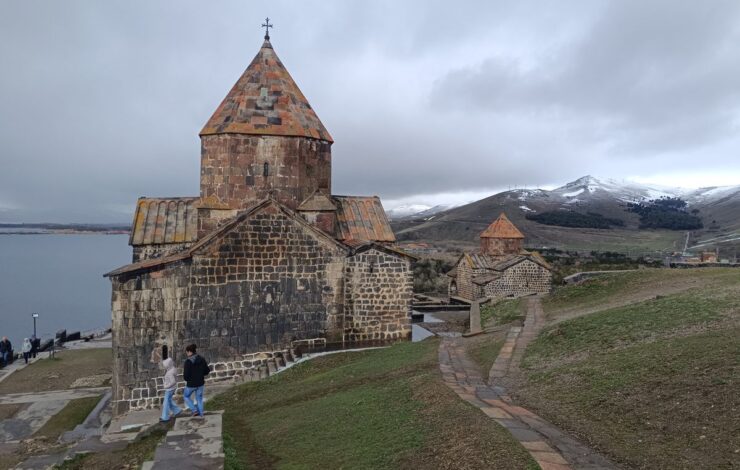
Lake Sevan sits at 1,900 metres above sea level — the largest high-altitude lake in the world by some measures — and its water is an improbable deep blue against the surrounding mountains. In July and August the water reaches 18–22°C and the beaches fill with Armenian families. Sevanavank monastery on the peninsula (9th century, free) is 200 steps up from the shore. The ishkhan trout endemic to the lake, grilled over charcoal, is essential. 65 km from Yerevan.
Walk Down to the Symphony of Stones
Between Garni and Geghard, the Azat river gorge reveals a wall of perfectly hexagonal basalt columns 50 metres high — formed from cooling lava 14,000 years ago. Most visitors drive past. The walk down to the river bank takes 15 minutes on a rough path and gives you an upward view of the columns that no photograph captures accurately. Free entry. Ask your driver to stop — it is not signposted on most maps.
Go Stargazing at Lake Sevan
The altitude (1,900 m) and dry air of the Sevan basin make it one of the best stargazing locations in the Caucasus. On a clear night the Milky Way is visible with the naked eye. Organised stargazing experiences include a campfire on the north shore, a telescope session, and transport from Yerevan. Best from May to October when the nights are clear and not too cold.
Explore Khndzoresk Cave Village
Near Goris in southern Armenia — a semi-abandoned settlement of hundreds of cave dwellings carved into the walls of a red-sandstone gorge, inhabited until the 1950s. A suspension bridge crosses the gorge at the top; a steep path descends into the cave complex. The scale — and the remnants of everyday life still visible in the caves — make it one of the most remarkable and least-visited sites in the country. Free entry; allow 1.5–2 hours.
Staying in Armenia?
Most of these experiences are day trips from Yerevan. Book your base hotel early — July and September fill fast.
🏙 Yerevan City
Watch the Singing Fountains on Republic Square
Republic Square at dusk is one of those urban experiences that is exactly what it promises. The fountains run from roughly 7pm and perform choreographed sequences of water and light for 45 minutes. The surrounding tufa-stone buildings turn golden in the late sun. In July this is the best time to be outside in Yerevan — the day’s heat has broken, the square fills with families, and the scale of the thing is properly impressive. Free, every evening May–October.
Climb the Cascade at Sunset
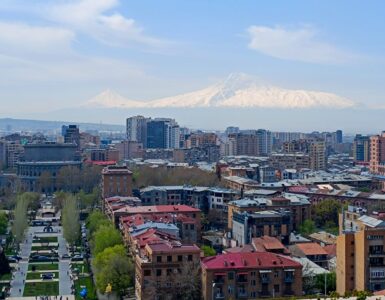
The Cascade’s 572 steps link the city centre to the residential districts above — but the point is the view from the top, and the Cafesjian Art Museum with Fernando Botero sculptures in the outdoor terraces on the way up. The view over Yerevan in the late afternoon light, with Ararat to the south when the sky is clear, is the best in the city. In July: take the internal escalators up during the heat and walk down in the cooling evening. Free outdoor access; museum AMD 1,500.
Visit the Parajanov Museum
The house-museum of filmmaker Sergei Parajanov is one of the most original museum experiences in the Caucasus — not a standard biography exhibition but a collection of collages, assemblages and art objects made by the director during his years of Soviet persecution. The pieces are extraordinary: made from buttons, doll parts, Soviet medals, fabric scraps, with an obsessive visual intelligence that is immediately apparent. AMD 1,000 ($2.56). Allow 90 minutes. The thing most worth seeing in Yerevan that is not Republic Square or the Cascade.
Walk Through the Kond Old Quarter
Kond is the only surviving pre-Soviet neighbourhood of Yerevan — narrow lanes, 19th-century stone houses, cats everywhere, wine bars and galleries opening alongside original residents. The streets are not straight. The views over the Hrazdan gorge from the upper lanes are completely different from anywhere else in the city. 15 minutes from Republic Square; guided tours are the best way to understand what you are looking at.
Need mobile data in Armenia?
An Armenian eSIM activated before you land means maps and translation apps work from the moment you arrive. AMD 1,950–3,900 ($5–10) for 7–14 days of data.
🍷 Food & Wine
Spend an Evening on Saryan Street
Saryan Street is the centre of Yerevan’s natural wine movement — wine bars pouring Armenian, Georgian and regional wines by the glass, outdoor terraces filling from 7pm, food ranging from snacks to full meals. In July this is the best place in the city after dark: warm evenings, outdoor tables, and a glass of Areni Noir from Vayots Dzor that costs AMD 1,500–2,500 ($3.85–6.40). The best evening itinerary in Yerevan costs almost nothing.
Taste Wine at Areni — the World’s Oldest Winery Site
The Areni cave in Vayots Dzor contains the remains of the world’s oldest known winery (approximately 4,100 BC). The village of Areni, nearby, is the centre of Armenia’s most important wine region — producing the Areni Noir grape that makes Armenia’s most distinctive red wines. Family wineries offer tastings direct from the cellar for AMD 3,000–5,000 ($7.70–12.80). Usually combined with Khor Virap or Noravank on a day trip south.
Tour the Ararat Brandy Distillery
The Yerevan Ararat Brandy Company has been operating since 1887. The tour covers the history, the oak barrel cellars, and a guided tasting of the range from the 5-year to the 20-year Nairi. Winston Churchill reportedly had Ararat cognac shipped to Chequers during the war — a detail the tour mentions with understandable pride. AMD 5,000–10,000 ($12.80–25.60). Book ahead in July when it fills quickly.
Cook Armenian Food with a Local Family
The most memorable food experience available in Yerevan — a cooking class in a home kitchen where you make dolma, lavash and salads with a local family, then eat what you cooked. The recipes are real family recipes, not a standardised tourist format. The best way to understand Armenian food culture in three hours. Book ahead — limited availability in peak season.
🚡 Active & Adventure
Hike to Tatev Hermitage
A 30-minute hike from Tatev Monastery along the edge of the Vorotan gorge leads to the Tatev Hermitage (Anapat) — a smaller complex of cave churches and monk cells carved directly into the cliff face. Almost no tourists reach it. The path follows the gorge edge with views straight down to the river. For visitors who want to go beyond the main monastery complex, this is the best option in southern Armenia. Free; sturdy footwear required.
Drive the Southern Armenia Road Trip
The most rewarding way to see Armenia is by car — the road south from Yerevan through Khor Virap, the Areni wine region, Noravank canyon, and down to Goris and Tatev covers the best of southern Armenia in 2–3 days. The roads are fully paved and well-signed. A rental car costs AMD 15,000–20,000 ($38–51) per day. The freedom to stop at Noravank canyon when the light is right, or spend an extra hour at a roadside winery, is worth more than any organised tour format.
How Many Days Do You Need in Armenia?
| Duration | What you can cover | Best for |
|---|---|---|
| 2–3 days | Yerevan city (#11–14, 17), Garni & Geghard (#2, 8), Khor Virap (#1) | Weekend trip, first taste of Armenia |
| 5 days | Above + Lake Sevan (#7), Noravank (#5), wine tasting (#16) | Most visitors — good coverage without rushing |
| 7 days | Above + Tatev (#6, 19), Khndzoresk (#10), Debed Canyon (#3) | Recommended — covers the full country |
| 10–14 days | Full Armenia + Georgia combination | Best value — both countries complement each other |
Full day-by-day routes: One Week in Armenia · 2 Weeks Georgia & Armenia
Arriving in Yerevan?
Zvartnots Airport is 12 km from centre. Pre-book a fixed-price transfer — avoids the unofficial taxi situation entirely and is the safest option for first-time arrivals.
Before You Go — Practical Essentials
Plan Your Armenia Trip
- Armenia Travel Guide 2026 — complete overview
- Yerevan Travel Guide 2026 — the capital in depth
- Where to Stay in Yerevan — all hotels compared
- Garni & Geghard from Yerevan — items #2 & #8
- Lake Sevan Guide — items #7 & #9
- Tatev Monastery Guide — items #6 & #19
- Debed Canyon — Haghpat & Sanahin — item #3
- Armenian Food Guide — items #15–18
- Armenia Travel Costs 2026
- Is Armenia Safe? 2026
- Best Time to Visit Armenia
- Georgia Travel Guide 2026 — the neighbouring country
- Georgia vs Armenia — Which to Visit?
Frequently Asked Questions
What is Armenia best known for?
Armenia is best known for being the world’s first Christian nation (301 AD), for Mount Ararat (visible from Yerevan but technically in Turkey), for the 1915 genocide that shapes modern Armenian identity, for a wine culture dating back 6,000 years, and for medieval monasteries of extraordinary quality. For visitors, the practical highlights are Khor Virap with Ararat, the Tatev cable car, Lake Sevan, and Yerevan’s wine bar scene.
Is Armenia worth visiting?
Yes, without reservation. Armenia is significantly undervisited relative to its quality — the monasteries rival anything in Western Europe, the landscape is extraordinary, the food is genuinely good, and Yerevan is a more interesting and liveable city than its international reputation suggests. It is also considerably cheaper than Western Europe. Most people who visit wish they had come sooner and stayed longer.
How many days do you need in Armenia?
Five days covers the essentials comfortably: Yerevan (2 days), Garni and Geghard (half day), Khor Virap and Noravank (full day), Lake Sevan (full day). Seven days adds Tatev, Khndzoresk and the Debed Canyon. Two weeks allows you to combine Armenia and Georgia — highly recommended as the two countries complement each other well.
What is the best time to visit Armenia?
May–June and September–October. Spring has wildflowers and comfortable temperatures (18–26°C); autumn has golden colour in the gorges and a more relaxed atmosphere than summer. July–August are hot (34–38°C in Yerevan) but good for Lake Sevan swimming and mountain regions. See our Best Time to Visit Armenia guide for month-by-month detail.
What is unique about Armenia?
Several things genuinely not found elsewhere: the cave churches of Geghard carved directly into the cliff face; the Wings of Tatev cable car descending 320 metres into the Vorotan gorge; the view of Mount Ararat from Khor Virap; the Noratus khachkar cemetery with 900+ medieval carved stone crosses; and the Areni wine region with the world’s oldest known winery site. Armenia does not do imitations of experiences available elsewhere — it has its own.
Can you combine Armenia and Georgia in one trip?
Yes — and most experienced travellers recommend it. The two countries are 280 km apart by road, the overland journey through the Debed Canyon passes two UNESCO monasteries, and the countries are different enough to be complementary. Ten to fourteen days covers both properly. See our Georgia vs Armenia comparison and 2-Week Georgia & Armenia Itinerary.
Ready to Plan Your Armenia Trip?
Book flights and accommodation early — July and September–October fill fast.
This article contains affiliate links. If you book through them, CaucasusExpert.com earns a small commission at no extra cost to you. All recommendations are based on personal experience and honest assessment. Full disclosure policy.