 grozdan44
Lake Sevan from Yerevan — Complete Guide 2026
Armenia’s blue jewel. What to do, where to stay, when to go — and what most visitors miss.
Lake Sevan sits at 1,900 metres above sea level in the mountains east of Yerevan, and it is the kind of place that Armenians treat as an extension of their backyard and visitors tend to underestimate. It is one of the largest high-altitude lakes in the world, the colour of it is an improbable deep blue against the brown-gold of the surrounding mountains, and the monastery on the peninsula — Sevanavank — has been there in one form or another since the 9th century. The ishkhan trout are extraordinary. The Noratus khachkar cemetery nearby is one of the most moving places in the country. This guide covers how to do it properly.
Planning a trip to Lake Sevan?
Sevan is 65 km from Yerevan — about 1 hour by car. It works as a day trip or an overnight stay. The best months are June and September; July–August are crowded and the water level drops. Tours from Yerevan are the easiest option; a rental car gives you freedom to explore the less-visited north shore.
Quick Answer — Is Lake Sevan worth visiting from Yerevan?
Yes, without question. Lake Sevan is one of the most striking landscapes in Armenia — a high-altitude lake of remarkable blue surrounded by mountains, with a 9th-century monastery on a peninsula, a medieval khachkar cemetery at Noratus, and some of the best freshwater fish in the region. It works as a half-day, a full day, or an overnight. Most visitors do it as a day trip from Yerevan combined with Sevanavank and Noratus. If you have two days, an overnight on the north shore with a stargazing evening is one of the best experiences in the country.
What’s in this guide
Sevanavank Monastery — What You’re Actually Looking At
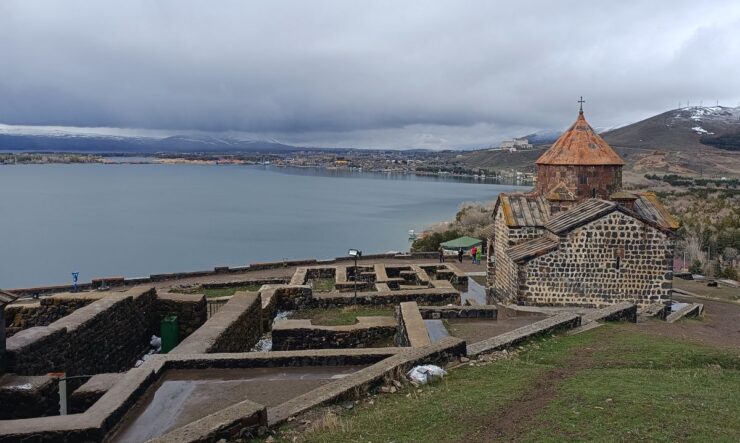
Sevanavank sits on a peninsula that was once an island until Soviet-era water extraction lowered the lake level by 18 metres in the mid-20th century. The walk up the 200 steps from the shore takes about 10 minutes and opens onto two churches on a rocky promontory with 360-degree views of the lake and the mountains behind it. On a clear morning, when the light is coming from the east and the water is still, it is one of the finer views in Armenia.
The monastery was founded in 874 AD by Princess Mariam, daughter of the Armenian king Ashot I. The two surviving churches — Surb Arakelots and Surb Astvatsatsin — date from that period, built in the characteristic Armenian style of the early medieval period: dark basalt walls, conical dome, carved khachkars on the exterior. The complex was far larger originally; most of it was dismantled in the 19th century when a Russian tsar ordered the monks relocated.
Entry is free. Modest dress required — shoulders and knees covered, head covering for women inside the churches. The souvenir stalls at the base of the steps sell the usual mix of khachkar reproductions, pomegranate products and Armenian brandy miniatures. The dried fish (stored in open air on racks) is a local speciality — it is what it looks like and smells like. Whether that is appealing or not depends entirely on you.
Timing tip
Sevanavank gets its first tour buses by 10–10:30am. Arrive before 9:30am for an uncrowded experience. If you arrive at midday in July you will share the steps with 300 people. It is still worth it but it is a different experience.
Noratus Khachkar Cemetery — The Part Most People Skip
Eight kilometres west of Sevanavank, just outside the village of Noratus, is the largest surviving medieval khachkar cemetery in Armenia — over 900 intricately carved stone crosses, some dating back to the 9th century, arranged across a hillside above the lake. Most tour operators drive past it. Most visitors have never heard of it. It is better than Sevanavank.
Khachkars — cross-stones — are a uniquely Armenian art form: tall stele carved with interlaced geometric and floral patterns surrounding a central cross. No two are identical. At Noratus the carvings range from simple early medieval forms to extraordinarily detailed 13th-century work with patterns of such complexity that they look like stone lace. Many have Armenian inscriptions. Most are still standing in their original positions.
Entry is free. No facilities, no souvenir stalls — just the hillside and the stones and the lake below. Allow 45–60 minutes. The path is unpaved and uneven; reasonable footwear is helpful. From Sevanavank it is an 8 km drive west, or ask your tour driver to add it — most will.
Most tours skip this
The majority of organised tours do not include Noratus unless you specifically request it. Before booking, check the itinerary. If Noratus is not listed, ask if it can be added — it adds 30–40 minutes to the day and is worth more than any additional monastery stop on most itineraries.
Beaches and Swimming at Lake Sevan
Sevan has beaches — the south and east shores have sandy and pebble stretches that become busy in July and August. The water temperature peaks at around 20°C in late July and August, which is the warmest it gets at 1,900 metres altitude. Swimming is perfectly possible; it is not the Caribbean.
The main beach area is near Sevan town on the south shore — this is the most developed and most crowded option, with sunbeds, vendors and café terraces. The north shore (around Tsovagyugh and further east) is quieter and more scenic; reaching it requires a car or a tour that specifically goes that way.
The stargazing experience at the lake — one of the most-booked activities in recent years — is best on the north shore away from the light pollution of Sevan town. The altitude and dry air make the night sky remarkable on clear nights.
What to Eat at Lake Sevan
The answer is ishkhan. Ishkhan (Armenian: իշխան, meaning “prince”) is the Sevan trout — a freshwater fish endemic to the lake that was nearly fished to extinction in the Soviet era and has been partially recovering since. It is served grilled over charcoal, whole, with lavash, herbs and pomegranate. There is nothing quite like it anywhere else in Armenia.
The lakeside restaurants along the south shore near Sevan town serve it reliably. Prices vary — a whole ishkhan runs AMD 4,000–8,000 ($10–20) depending on size and restaurant. The tourist trap version exists: restaurants nearest the Sevanavank car park charge two to three times what the places 500 metres down the road charge for the same fish.
Besides ishkhan: sig (another endemic Sevan fish, smaller, fried whole), crayfish (available in summer, boiled with bay leaf), barbecued pork at every roadside stop (the Armenian countryside default), and gata (sweet pastry) from the village bakeries.
Check the menu carefully
Some restaurants near Sevanavank sell “ishkhan” that is actually imported rainbow trout. The real ishkhan is more expensive and sometimes marked as “Sevan trout” specifically. If the price seems very low for a whole fish, ask. The flavour difference is significant.
Which Tour to Book from Yerevan
Sevan is straightforward to reach by car but most visitors opt for a tour — especially if combining with Dilijan, Tsaghkadzor or Noratus. Here are the options worth considering.
Best for: Quick visit, private
Private Half-Day: Sevan & Sevanavank
4–5 hours, covers Sevanavank monastery and the lake. Good if you want Sevan without a full day commitment. Ask the driver to add Noratus — it is 8 km away and worth it.
From ~$30–45/person
Best for: Full day, private
Private Full Day: Sevan & Monasteries + Lunch
Full day with private guide, Sevanavank, Noratus, and lunch at a lakeside restaurant. The most comfortable option for 2–4 people who want flexibility.
From ~$45–65/person
Best for: Budget, social
Group Tour: Tsaghkadzor, Sevan & Trout Barbecue
Small group combining Tsaghkadzor ski resort and cable car with Lake Sevan and a trout barbecue lunch. Good value, good for solo travellers. Busy in summer.
From ~$25–35/person
Best for: Sevan + Dilijan combo
Group Tour: Sevan, Dilijan, Haghartsin & Goshavank
Full day combining the lake with Dilijan’s medieval monasteries (Haghartsin and Goshavank) in the forest. One of the best-value full-day itineraries from Yerevan.
From ~$25–40/person
Best for: Wine lovers
Lake Sevan, Dilijan & Ijevan Wine Tour
Combines Sevan and Dilijan with a visit to Ijevan wine region in the Tavush forest. Good for those who want the lake plus Armenia’s lesser-known wine country in one day.
From ~$35–50/person
Best for: Night sky
Stargazing at Lake Sevan — Campfire Night
Evening departure from Yerevan, campfire on the north shore, telescope stargazing. The altitude and dry air make Sevan one of the best stargazing spots in the Caucasus. Genuinely special experience.
From ~$30–45/person
Best for: From Tbilisi
Day Tour: Dilijan & Lake Sevan from Tbilisi
If you are based in Tbilisi and want to see Armenia in a day — this tour crosses the border, covers Dilijan and Sevan, and returns to Tbilisi. Long day (12+ hours) but covers the essentials.
From ~$55–80/person
Best for: Self-drive
Rent a Car — Full Freedom
Sevan’s north shore, Noratus, and the back roads around the lake are best explored by car. The road from Yerevan is fully paved motorway. A rental gives you total flexibility on timing and stops.
From ~$38/day
Getting to Lake Sevan from Yerevan
Sevan is 65 km from Yerevan on the M4 motorway — one of the best roads in Armenia. The drive takes 55–70 minutes depending on traffic leaving Yerevan.
By marshrutka: Minibuses to Sevan town depart from Yerevan’s Kilikia bus station roughly every 30–60 minutes from around 8am. Cost: AMD 600–800 ($1.50–2). Journey time: 1.5 hours. This gets you to Sevan town; from there you need a taxi to Sevanavank (AMD 500–800/$1.25–2) or you can walk the 3 km along the lake shore.
By taxi/private car: Yandex Go or Bolt from central Yerevan to Sevanavank runs AMD 4,000–6,000 ($10–15) one way. Agree the return pickup time before the driver leaves — there are few taxis waiting at the site.
By rental car: The M4 motorway is straightforward. Follow signs for Sevan/Sevan Lake. Parking at Sevanavank: AMD 200 ($0.50).
Best Time to Visit Lake Sevan
| Month | Weather | Water temp | Crowds | Verdict |
|---|---|---|---|---|
| Apr–May | Cool, 10–18°C | Cold, ~10°C | Low | Great for scenery, no swimming |
| June | Warm, 20–25°C | 15–18°C | Medium | Best month overall |
| Jul–Aug | Hot, 25–30°C | 18–22°C | Peak — very busy | Go early morning |
| September | Warm, 18–24°C | 16–18°C | Dropping | Second best month |
| Oct–Nov | Cool, 8–16°C | Cold | Very low | Beautiful colours, cold |
| Dec–Mar | Cold, snow possible | Near freezing | Almost none | For photographers only |
Best overall: June and September. June has good weather, moderate crowds, and the wildflowers on the hillsides above the lake are still in bloom. September has golden light, the water is still warm enough to swim, and the summer crowds have thinned.
Where to Stay at Lake Sevan
Staying overnight at Sevan rather than day-tripping from Yerevan is genuinely worth it — the lake at dawn and dusk is different from the midday version most day-trippers see, and the stargazing on a clear night is exceptional. These are the options I would actually recommend.
Luxury Resort
Luxury Collection Hotel, Sevan
The premium option on the lake — full resort facilities, lake views, spa, restaurant. Comparable standard to the Marriott Luxury Collection in Yerevan. The best address at Sevan.
Boutique / Heritage
Tufenkian Avan Marak Tsapatagh
Part of the Armenian-owned Tufenkian Heritage group. A restored complex on the lake shore with strong local character, excellent food, and the kind of atmosphere that large resorts cannot manufacture. My personal recommendation for the lake.
Nature Resort
Noy Land Resort
Lakeside resort with well-maintained grounds, comfortable rooms, and a good restaurant. Popular with Armenian families; reliably good standard at mid-range prices.
Mid-range
Best Western Bohemian Resort
Good value mid-range option with lake access, outdoor pool, and reliable service. The Best Western brand means consistent standards; the Sevan location makes it a solid base for the region.
Family complex
Tsovasar Family Rest Complex
A well-regarded family resort complex directly on the lake. Good for families with children — pool, beach access, multiple room types. Popular with Yerevan residents for weekend escapes.
Budget / Cottages
Sevanta Lake Cottages
Self-contained cottages on the lake shore — a good option for small groups or families who want their own space. Simple, comfortable, lake views, significantly cheaper than the resort options.
Guesthouse with views
Chkalovka Guest House With Sevan View
Small guesthouse with lake views — the budget end of the market done well. Friendly hosts, good breakfast, the view from the terrace is the main selling point. Best for travellers who want character over facilities.
All seasons
All Seasons Sevan
A solid year-round option with indoor pool — useful for the colder months when most lakeside properties close. Good choice for a winter or late-autumn visit when the lake is quiet and the landscape is at its most atmospheric.
More Armenia Guides
- Armenia Travel Guide 2026 — complete country overview
- Yerevan Travel Guide 2026 — the capital in depth
- Garni Temple & Geghard Monastery from Yerevan
- Tatev Monastery Guide — Wings of Tatev cable car
- Debed Canyon — Haghpat & Sanahin — UNESCO monasteries
- Best Time to Visit Armenia 2026
- Armenia Travel Costs 2026
- Is Armenia Safe? 2026
- Getting from Tbilisi to Yerevan
- Georgia Travel Guide 2026 — the neighbouring country worth combining
Frequently Asked Questions — Lake Sevan
How far is Lake Sevan from Yerevan?
Lake Sevan is 65 km from central Yerevan — about 55–70 minutes by car on the M4 motorway. Marshrutka from Kilikia bus station takes about 1.5 hours and costs AMD 600–800 ($1.50–2).
Is Lake Sevan worth visiting?
Yes. It is one of the largest high-altitude lakes in the world, the scenery is striking, and the combination of Sevanavank monastery, the Noratus khachkar cemetery, and ishkhan trout makes it one of the most rewarding day trips from Yerevan. June and September are the best months.
Can you swim in Lake Sevan?
Yes, in summer. Water temperature peaks at around 18–22°C in July and August. The main beaches are on the south shore near Sevan town. The water is clean; the altitude means the air temperature can drop quickly in the evening even in summer.
What is ishkhan and where do you eat it?
Ishkhan is the Sevan trout — a freshwater fish endemic to the lake, grilled whole over charcoal and served with lavash. It is the thing to eat at Sevan. The lakeside restaurants near Sevan town serve it; avoid the highest-priced places immediately at the Sevanavank car park and walk a few hundred metres for better value and quality.
What is the best time to visit Lake Sevan?
June and September. June has good weather, moderate crowds, and wildflowers still on the hillsides. September has golden light, warm water, and significantly fewer people than the July–August peak. Avoid mid-July to mid-August if you dislike crowds.
What is Noratus and is it worth visiting?
Noratus is a village 8 km west of Sevanavank with the largest surviving medieval khachkar cemetery in Armenia — over 900 carved stone crosses dating from the 9th century onward. Most tours skip it. It is free to enter, takes 45–60 minutes, and is in my opinion better than Sevanavank itself. Ask your driver or tour operator to add it.
Can you visit Lake Sevan as a day trip from Tbilisi?
Yes, but it is a long day — the drive from Tbilisi to Sevan is about 3 hours each way via the Georgian-Armenian border. A guided tour from Tbilisi that combines Dilijan and Sevan makes more sense than driving yourself. Allow 12+ hours for the round trip.
Ready to Visit Lake Sevan?
Tours sell out in June and September — book ahead. Hotels on the lake are limited; reserve early for summer.
This article contains affiliate links. If you book through them, CaucasusExpert.com earns a small commission at no extra cost to you. All recommendations are based on personal experience and honest assessment. Full disclosure policy.