 grozdan44
Yerevan Travel Guide 2026 — What to See, Eat & Do
Armenia’s capital is more interesting than most visitors expect. Here is the version that goes beyond Republic Square.
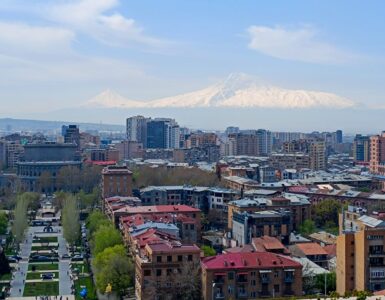
Yerevan is a city that people consistently underestimate before they arrive and consistently want to return to after they leave. It is not an obvious destination — it lacks the brand recognition of Tbilisi, the scale of Istanbul, the ancient ruins of Rome. What it has instead is a specific quality of life that is difficult to articulate until you experience it: good food at honest prices, a genuine warmth in how strangers interact, a wine bar scene that has developed rapidly over the last decade, and the permanent presence on the southern horizon — on clear days — of the snow-covered summit of Mount Ararat, which is technically in Turkey and which Armenians consider theirs. This guide covers what to actually do, see and eat.
Visiting in July 2026
July is peak summer — Yerevan reaches 34–38°C during the day. The city is busy with Armenian diaspora visitors and international tourists. Plan outdoor sightseeing for early morning (before 10am) or evening (after 6pm). Afternoons are best spent in air-conditioned museums, cafes or your hotel. The Cascade steps and Republic Square fountains are popular evening gathering spots when the heat breaks.
Planning your Yerevan visit?
Yerevan needs a minimum of 2 full days to cover the essentials — Republic Square, the Cascade, Tsitsernakaberd memorial, the markets, and an evening on Saryan Street. Three days is more comfortable and allows a day trip to Garni and Geghard. Book your hotel as soon as dates are fixed — July is peak season and the better hotels fill well in advance.
Quick Answer — Is Yerevan worth visiting?
Yes, absolutely. Yerevan is one of the most underrated capital cities in the broader European and Middle Eastern region. It has a walkable centre, genuinely excellent food, a wine bar scene that has come into its own over the last five years, the Tsitsernakaberd genocide memorial which is one of the most important and moving sites in the Caucasus, and the permanent backdrop of Mount Ararat on clear days. Two to three days in Yerevan is the right amount; most people wish they had booked more.
What’s in this guide
Top Things to See in Yerevan
Essential
Republic Square
The centrepiece of Yerevan — a large oval piazza surrounded by tufa stone government buildings in the Soviet-Armenian neo-classical style. The singing fountains run evenings from May to October. The National History Museum and National Gallery are on the square. Best at dusk when the stone turns golden and the fountains are lit.
Free · Open always · Best at 7–9pmEssential
Tsitsernakaberd Genocide Memorial
The Armenian Genocide Memorial and Museum on a hilltop west of the centre. The eternal flame inside the monument, the 44-metre stele, and the museum below are among the most significant and carefully designed memorial sites in the world. Allow 2–3 hours for the museum. Not optional for anyone who wants to understand Armenia.
Museum: AMD 1,000 ($2.56) · Closed Mon · 10am–6pmEssential
The Cascade
A giant stairway of 572 steps connecting the city centre to the Kentron and Arabkir districts above. The Cafesjian Art Museum occupies the interior — contemporary art, sculpture gardens, Jim Dine and Fernando Botero pieces in the outdoor terraces. The view from the top over the city and towards Ararat is the best in Yerevan.
Escalators inside · Free outdoor · Museum AMD 1,500Essential
Kond Old Quarter
The oldest surviving neighbourhood of Yerevan — narrow lanes, 19th-century stone houses, cats on every wall. A 15-minute walk from Republic Square but a completely different atmosphere. The neighbourhood is partially dilapidated and partially gentrifying — wine bars and small galleries have opened alongside the original residents’ houses.
Free · Best on foot · 1–2 hoursShould See
Sergei Parajanov Museum
The house-museum of the Armenian-Georgian filmmaker Sergei Parajanov — one of the great directors of Soviet cinema (The Colour of Pomegranates, Shadows of Forgotten Ancestors). The collages, assemblages and personal objects are extraordinary. Small museum; allow 60–90 minutes. One of the genuine hidden gems of Yerevan.
AMD 1,000 ($2.56) · Closed Mon · 10:30am–5pmShould See
Vernissage Flea Market
Open-air market adjacent to Republic Square every weekend — Soviet memorabilia, Armenian carpets, jewellery, handicrafts, paintings, books. More interesting on Sunday than Saturday. The surrounding cafes are good for breakfast before the market gets busy. Bargaining is expected and possible.
Free entry · Weekends 9am–4pmShould See
GUM Market & Pak Shuka
The two main covered markets — GUM for general produce, Pak Shuka for spices, dried fruit, cheese, fresh lavash and Armenian staples. The real Yerevan, not the tourist version. Go on a weekday morning. The cheese stalls alone are worth the visit.
Free · Mon–Sat mornings · Best before noonShould See
Blue Mosque (Göy Məscid)
The only functioning mosque in Yerevan — an 18th-century Persian mosque with a tiled blue dome restored in the 1990s with Iranian funding. Open to non-Muslim visitors outside prayer times. The courtyard is one of the quietest spots in central Yerevan. Worth 30 minutes.
Free · Closed during prayersFor Cognac Lovers
Ararat Brandy Distillery
The Yerevan Ararat Brandy Company has been operating since 1887. Tours cover the history, the oak barrel ageing cellars, and a tasting of the range from 5-year to 20-year aged. One of the most enjoyable 90 minutes available in Yerevan for anyone who drinks spirits.
AMD 5,000–10,000 ($12.80–25.60) · Book ahead in JulyChurches
Surb Zoravor Church
The oldest surviving church in Yerevan (1693) — a small, dark, incense-heavy church on a side street near the central market. Active congregation, genuinely atmospheric. Often overlooked because it is not on the main tourist circuit. Worth seeking out.
Free · Open most daysRepublic Square — More Than a Postcard
Republic Square (Hanrapetutyan Hraparak) is the symbolic heart of Yerevan — an oval piazza designed by architect Alexander Tamanian in the 1920s, surrounded by six buildings in the Armenian neo-classical style using the distinctive pink and ochre tufa stone that gives Yerevan its nickname “the Pink City.” The National History Museum, the National Gallery, the Government building, and the Armenia Marriott Hotel all face the square.
The square is best experienced in the evening in July — the singing fountains run from roughly 7pm and the temperature has dropped enough to make sitting outside genuinely pleasant. The cafes around the square fill with families, diaspora visitors and locals in a mix that is specific to summer Yerevan. The light on the tufa at dusk is something photographs never fully capture.
The Cascade — Art, Views and the Long Walk Up
The Cascade is a 572-step monumental stairway linking the city centre to the Arabkir residential district above. Construction began in the Soviet period and was completed and extended by the Cafesjian family foundation in the 2000s. The result is one of the better urban art spaces in the region: the interior houses the Cafesjian Art Museum with a permanent collection of 20th-century international art, and the outdoor terraces have sculptures by Fernando Botero, Jim Dine and Lynn Chadwick among others.
The view from the top over the city is the best in Yerevan — and the only one from which you see both the full spread of the city and, on clear days, the profile of Ararat to the south. In July, go up in the late afternoon when the light is good and the temperature has dropped slightly. The escalators inside the structure mean you do not have to walk all 572 steps in the heat if you do not want to.
July tip — Cascade in the evening
The Cascade is very crowded midday in July. Go after 5pm when tour groups thin out and the light improves. The terraces at the top are a good place to watch the sunset over the city. The Cafesjian Museum café serves good coffee and is air-conditioned — useful as a midday refuge.
Tsitsernakaberd — The Armenian Genocide Memorial
The Tsitsernakaberd memorial complex sits on a hill west of central Yerevan and is the most important site in the city for understanding Armenia and Armenians. The memorial was completed in 1967: a 44-metre split stele representing the division of Armenian lands, twelve inclined basalt slabs forming a circle around the eternal flame, and below ground, the Genocide Museum tracing the 1915 genocide of approximately 1.5 million Armenians by the Ottoman government.
The museum is serious, well-curated and devastating in the way that genocide museums are when they are done honestly. Allow two to three hours for the full complex including the museum. The memorial garden includes an alley of trees planted by visiting heads of state.
Visiting respectfully
Tsitsernakaberd is an active memorial where Armenians come to grieve as well as remember. Photography is permitted in most areas but treat the space as you would any memorial — quietly, without intrusion. April 24th (Genocide Remembrance Day) sees hundreds of thousands of Armenians walk to the memorial; visiting on this day requires planning.
Planning your Yerevan stay?
July is peak season — hotels fill fast. Lock in accommodation before finalising your itinerary.
Kond — Yerevan’s Old Quarter
Kond is the only surviving pre-Soviet neighbourhood of Yerevan — a tangle of narrow lanes and 19th-century stone houses on a rocky promontory above the Hrazdan gorge, about 15 minutes’ walk from Republic Square. The neighbourhood has been simultaneously threatened with demolition for decades and partially saved by the same gentrification that has brought wine bars and small galleries into its lower streets.
Walking through Kond is the closest you get to the Yerevan that existed before Alexander Tamanian’s Soviet-era redesign turned the city into the pink-stone planned capital it is today. Old women sit outside on chairs. Cats are everywhere. The streets are not straight. The views over the gorge from the upper lanes are completely different from anything in the rest of the city.
Markets — Where the Real City Is
Yerevan’s markets are where food culture, local life and the best shopping in the city converge. Three are worth your time.
GUM Market (Tigranyan Street) — the main covered market, open daily. Produce, meat, dairy, honey, preserves. The cheese section alone justifies the visit — dozens of varieties of Armenian white cheese ranging from fresh and mild to aged and powerful. Best on weekday mornings before the tourist-adjacent stalls set up.
Pak Shuka (covered market near Mashtots Avenue) — spices, dried fruit, churchkhela, nuts, fresh lavash made on site. Smaller and more concentrated than GUM. The lavash comes off the tonir oven and goes directly to your hands — bring cash, eat immediately.
Vernissage (adjacent to Republic Square, weekends) — flea market and craft market. Soviet-era cameras, Armenian carpets, jewellery, paintings, handmade ceramics. The interesting objects are at the edges and the back; the front stalls near the main entrance are the most touristy.
Tours & Activities in Yerevan
Yerevan is very walkable and most people explore independently. But guided tours add significant value for specific purposes: getting under the surface of neighbourhoods you would otherwise skim, finding food you would not find alone, and understanding the historical context that makes the city make sense.
Best overview
City Tour with Local Guide
A comprehensive city tour covering Republic Square, the Cascade, Tsitsernakaberd, the Kond quarter and the main churches. Good for first-day orientation — you cover the ground efficiently and get context that makes the next two days more rewarding.
From ~$25–45/person
Best for July evenings
Evening Walking Tour with Local Guide
The right format for July — a walking tour that starts when the temperature drops, covering the illuminated fountains, the wine bars of Saryan Street and the evening life of Kentron. Yerevan in the evening is a different city from the daytime version and this tour is designed around it.
From ~$20–35/person
Best food experience
Gastro-Cultural Walking Tour
A food-focused walking tour covering the gastronomy and culture simultaneously — markets, street food, wine bars, with a guide who explains the cultural context behind what you are eating. Combines the food tour and city tour formats into one experience.
From ~$35–55/person
Best food + hidden places
Food, Hidden Places & Stories Walking Tour
Focused specifically on the parts of Yerevan that standard city tours skip — the hidden courtyards, the neighbourhood restaurants, the stories behind the food. For visitors who have done the highlights and want to go deeper.
From ~$35–55/person
Best for spirits lovers
Tour & Distillates Tasting — 100-Year Courtyard
A tour of a historic Yerevan courtyard with tasting of Armenian distillates — brandy, mulberry oghee, fruit vodkas. Intimate format, genuinely interesting if you are interested in Armenian spirits beyond the standard Ararat cognac tour.
From ~$30–50/person
Best for day trips
Echmiadzin, Hripsime, Zvartnots City Tour
Combines Yerevan city sights with Echmiadzin — the seat of the Armenian Apostolic Church, the Vatican of Armenia — and the ruined Zvartnots Cathedral. Good for visitors who want religious and historical context alongside the city itself.
From ~$30–50/person
Best Things To Do in Yerevan — Top 10
If you are short on time or planning a Yerevan itinerary, these are the ten Yerevan attractions worth prioritising — ranked by a local who has been to all of them more times than she can count.
- Republic Square at dusk — singing fountains from 7pm, the best free evening in Armenia. Go at sunset when the tufa stone turns golden.
- Tsitsernakaberd Genocide Memorial — the most important site in Yerevan for understanding Armenia. Allow 2–3 hours for the museum.
- The Cascade — 572 steps, Cafesjian Art Museum inside, best Ararat views from the top. Use escalators up in July heat, walk down in the evening.
- Parajanov Museum — the most original museum in the Caucasus. AMD 1,000. One of those places you recommend to everyone and none of them expect.
- Kond old quarter — the only surviving pre-Soviet neighbourhood. Narrow lanes, cats, wine bars, views over the gorge. 15 minutes from Republic Square.
- GUM Market weekday morning — the real Yerevan. Cheese, lavash, spices, preserved fruit. Go before noon.
- Vernissage weekend market — Soviet cameras, Armenian carpets, jewellery, paintings. Interesting objects at the back, away from the entrance.
- Ararat Brandy Distillery tour — since 1887. The barrel cellar, the history, a tasting flight from 5-year to 20-year. Book ahead in July.
- Saryan Street wine bars — Yerevan’s natural wine scene at its best. Go after 7pm, order Areni Noir, stay until midnight.
- Yerevan food tour or cooking class — the fastest way to understand Armenian food culture. Markets, local restaurants, and dishes you would not find alone.
How Many Days Do You Need in Yerevan?
1 day in Yerevan: Republic Square and fountains, Cascade, one market. Enough for a first impression; not enough for the city. Good for layover visitors or those combining Yerevan with a tight itinerary.
2 days in Yerevan: The right minimum for a first visit. Day one: Tsitsernakaberd, Cascade, Kond quarter, Saryan Street evening. Day two: GUM market morning, Parajanov Museum, Ararat Distillery, Vernissage weekend. Most visitors on a 7-day Armenia itinerary spend 2 days in Yerevan.
3 days in Yerevan: Adds a day trip — Garni and Geghard (40 km east) or Khor Virap (30 km south). The right amount for visitors specifically interested in Yerevan’s food, wine and contemporary culture scene.
4+ days in Yerevan: For visitors who want to explore the neighbourhoods beyond Kentron, attend a performance at the Opera House, visit smaller museums (National History Museum, Modern Art Museum), or simply slow down. Yerevan rewards unhurried visitors.
Food & Drink in Yerevan
Yerevan’s food scene is better than its international reputation suggests and improving year on year. The tourist trap zone is well-defined — avoid it. The genuine scene is accessible if you know where to look.
For traditional Armenian food
The best traditional cooking is in the neighbourhood restaurants of Kentron that do not advertise in English. Look for places with handwritten daily specials boards and a majority Armenian clientele. A full lunch with drinks should cost AMD 3,000–6,000 ($7.70–15.40) per person. The stolovaya (Soviet-style canteen) format still exists in Yerevan and produces some of the best-value food in the city.
Saryan Street — the wine bar strip
Saryan Street (Saryan Poghots) is the centre of Yerevan’s natural wine movement — a cluster of wine bars serving Armenian, Georgian and regional wines by the glass, with food ranging from snacks to full meals. Best visited from 7pm onwards. In July the outdoor terraces fill quickly; arrive early or accept that you may wait for a table at the more popular spots.
July food note
July in Yerevan is peak season for stone fruit — the markets are full of peaches, apricots (Armenia’s national fruit, at their absolute best in late June to late July), nectarines and plums. Buy them at GUM market rather than the tourist-facing stalls near Republic Square. The price difference is significant and the quality is identical.
For the full Armenian food guide: Armenian Food Guide 2026 — what to order, what things are called, and where to find the real thing.
Where to Stay in Yerevan
Stay in Kentron — the central district. In July, confirm air conditioning before booking anything. These are the picks across the main categories:
★ Luxury — Best Overall
The Alexander, Luxury Collection
From ~$150–220/nightBest hotel in Yerevan — pool, spa, rooftop bar with Ararat views. Book well ahead for July.
★ Boutique — Best Character
L’Image Art Hotel
From ~$70–110/nightArt-filled interior, central location, exceptional service. Best boutique option in the city.
★ Mid-range — Best Location
Republica Hotel Yerevan
From ~$55–90/night2 minutes from Republic Square, Tap Station restaurant, open terrace. Best mid-range address.
★ Budget — Best Located
Kantar Hostel
From ~$10–28/night5 minutes from Republic Square, social atmosphere, good for solo travellers and shared day trips.
Full hotel guide with all 15 options across every category: Where to Stay in Yerevan 2026.
Getting Around Yerevan
Yerevan’s centre is compact and walkable — Republic Square to the Cascade is 15 minutes on foot, Republic Square to the Parajanov Museum is 12 minutes. In July, walking midday is not pleasant (34–38°C); use the metro or app taxis during peak heat and walk in the morning and evening.
Metro: 10 stations, covers the main tourist corridor from Yeritasardakan to Republic Square and beyond. AMD 100 ($0.26) per journey. Clean, air-conditioned and reliable. The fastest way across the city centre.
App taxis: GG Taxi and Yandex Go both operate in Yerevan. AMD 700–1,200 ($1.80–3.10) cross-city. Always use the app — the price is fixed before you confirm and eliminates overcharging entirely.
From the airport: Zvartnots Airport is 12 km from centre. Pre-book a transfer for peace of mind on arrival.
Should you rent a car in Yerevan?
For Yerevan city itself — no, you do not need a car. The centre is walkable and app taxis cover everything else cheaply. For day trips to Garni, Sevan or Khor Virap — a rental car gives you total freedom on timing and stops, and is cheaper than organised tours for 3–4 people. The roads from Yerevan to all major day trip destinations are fully paved.
Day Trips from Yerevan
| Destination | Distance | Time needed | July note |
|---|---|---|---|
| Garni & Geghard | 28–40 km | Half day | Go early — gorge is cooler than city |
| Lake Sevan | 65 km | Full day | Peak season — beaches crowded, book accommodation ahead |
| Khor Virap & Ararat | 30 km south | Half day | Ararat clearest in morning before haze builds |
| Echmiadzin | 20 km west | Half day | UNESCO Cathedral — can combine with Zvartnots ruins |
| Tatev Monastery | 260 km | Full day or overnight | Long drive — cooler than Yerevan, worth it |
Tours for Khor Virap & Echmiadzin
Both Khor Virap (30 km south, best Ararat views in Armenia) and Echmiadzin (20 km west, the seat of the Armenian Apostolic Church) are easily combined into a half-day tour from Yerevan. Echmiadzin’s cathedral complex is UNESCO-listed since 2000.
Practical Information for July 2026
Money
Armenian dram (AMD). $1 ≈ AMD 390. ACBA Bank, Ameriabank and Ardshinbank ATMs have the best rates. Cards accepted everywhere in central Yerevan; carry AMD cash for markets and smaller restaurants.
SIM card
Get an eSIM before you land or a local SIM at the airport. Viva-MTS and Team (Ucom) are the main operators. An Armenia eSIM from Airalo is AMD 1,950–3,900 ($5–10) and takes five minutes to activate.
Luggage storage
If you need to store bags between checkout and your flight, Radical Storage has locations in central Yerevan.
Travel insurance
Get it before you fly. EKTA covers Armenia specifically with good medical evacuation cover — important given limited rural medical facilities outside Yerevan.
Plan Your Yerevan Trip — Everything in One Place
✈ Flights
Fly to Yerevan (EVN)
From Western Europe via Istanbul or Vienna. From US via Istanbul. Search and compare all routes.
🏨 Hotels
Where to Stay in Yerevan
Stay in Kentron. Compare 15 hotels from luxury to hostel across all budgets.
🚗 Airport Transfer
Zvartnots → City Centre
12 km from airport to centre. Pre-book a fixed-price transfer — avoids unofficial taxis on arrival.
📱 eSIM
Mobile Data in Armenia
Activate before landing. Essential for maps, translation and app taxis from Day 1.
🛡 Insurance
Travel Insurance for Armenia
Non-optional. Get before you fly. EKTA covers Armenia and Georgia on a single policy.
🗺 Tours
Day Trips from Yerevan
Garni & Geghard, Khor Virap, Lake Sevan — all available as guided day trips.
More Armenia Guides
- Armenia Travel Guide 2026 — complete country overview
- Where to Stay in Yerevan 2026 — full hotel guide, all 15 options
- Armenian Food Guide 2026 — what to eat and where
- Armenia Travel Costs 2026 — real budget breakdown
- Is Armenia Safe? 2026
- Best Time to Visit Armenia
- Garni & Geghard from Yerevan — best day trip
- Lake Sevan Guide
- Tatev Monastery Guide
- Getting from Tbilisi to Yerevan
- Georgia Travel Guide 2026 — the neighbouring country
Yerevan vs Tbilisi — Which City Should You Visit?
The most common question from travellers planning a Caucasus trip. The honest answer: visit both if you have the time — they are 280 km apart and different enough to be complementary rather than repetitive. But if you have to choose:
Choose Yerevan if you want a city with a more intimate scale, a deeper food culture, a specific historical weight (the genocide memorial, the oldest Christian nation), and a wine bar scene that has become genuinely interesting. Yerevan is smaller, quieter and more walkable than Tbilisi. The surrounding landscape — Ararat on the horizon, the Ararat plain stretching south — is spectacular in a way that Tbilisi’s setting is not.
Choose Tbilisi if you want a city with more obvious visual drama (the cliffside fortress, the sulphur bath domes, the mixed architecture of old town), a larger and more diverse restaurant scene, and a nightlife culture that has made it one of the more talked-about cities in Europe in the last decade. Tbilisi is more immediately seductive to first-time visitors.
Visit both if you have 10–14 days. The overland journey between them (4.5–5 hours by car through the Debed Canyon with its UNESCO monasteries) is itself a worthwhile experience. See our Georgia vs Armenia and Tbilisi vs Yerevan guides for the full comparison.
Frequently Asked Questions — Yerevan
How many days do you need in Yerevan?
A minimum of 2 full days to cover the essentials — Republic Square, the Cascade, Tsitsernakaberd memorial, the Parajanov Museum, the markets and an evening on Saryan Street. Three days is more comfortable and allows a half-day trip to Garni and Geghard. Four to five days allows you to do Yerevan properly and add Lake Sevan or Khor Virap.
Is Yerevan safe to walk around at night?
Yes. The central Kentron district is well-lit, populated until late and safe at night. Republic Square, Northern Avenue and Saryan Street are busy until midnight in summer. Use app taxis (GG Taxi, Yandex Go) rather than unofficial taxis late at night. See our full Is Armenia Safe? guide for more detail.
What is Yerevan known for?
Republic Square and the singing fountains, the Tsitsernakaberd Genocide Memorial, the Ararat Brandy distillery, the Cascade arts complex, the Parajanov Museum, and — increasingly — a natural wine bar scene that has developed rapidly in the last five years. Also: the permanent view of Mount Ararat on the southern horizon on clear days.
How hot is Yerevan in July?
Very hot — daytime temperatures regularly reach 34–38°C in July, occasionally higher. Plan outdoor sightseeing for early morning (before 10am) and evening (after 6pm). Museums, the metro and air-conditioned cafes are the sensible midday option. The evenings are beautiful — warm rather than oppressive, with outdoor terraces running until midnight.
What language is spoken in Yerevan?
Armenian (Հայerен) is the official language. Russian is widely spoken among older residents. English is increasingly spoken in restaurants, hotels and tourist areas — most people under 35 in central Yerevan have functional English. A few words of Armenian (Barev — hello, Shnorhakalutyun — thank you) are warmly appreciated.
What is the best thing to do in Yerevan?
The Tsitsernakaberd Genocide Memorial and Museum for historical understanding. The Parajanov Museum for the most original museum experience in the city. An evening on Saryan Street for wine and food. The Cascade for the view. The GUM market on a weekday morning for the real city. In July: all of the above, scheduled around the heat.
Ready to Visit Yerevan?
July is peak season — book your hotel now. The better options fill well in advance.
This article contains affiliate links. If you book through them, CaucasusExpert.com earns a small commission at no extra cost to you. All recommendations are based on personal experience and honest assessment. Full disclosure policy.